
In our fast-paced digital era, the constant barrage of notifications and screen time can lead to what scientists call “directed attention fatigue.” However, a growing body of research in environmental psychology suggests that the simplest remedy lies right outside our window. Nature isn’t just a place to visit; it is a fundamental requirement for a healthy, functioning brain.
The Restoration Theory
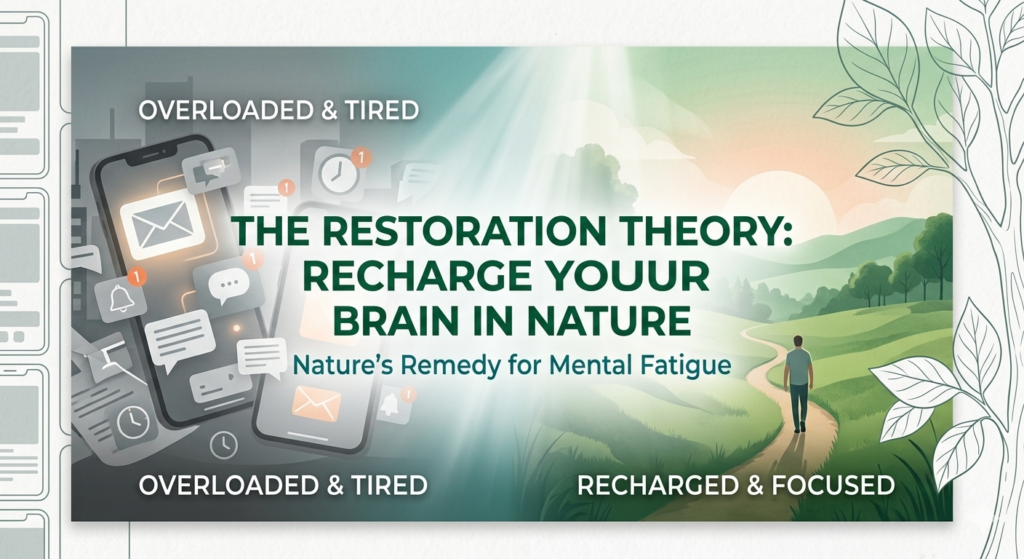
“Explore the profound connection between human wellness and the natural world. Discover scientific insights, practical tips, and inspiring stories for a mindful, eco-conscious life.”
Neurochemistry and the Great Outdoors
When we step into a forest or sit by a lake, our bodies undergo measurable physiological changes:
- Cortisol Reduction: Studies have shown that just 20 minutes in nature significantly lowers cortisol, the body’s primary stress hormone.
- Serotonin Boost: Exposure to natural sunlight and fresh air increases the production of serotonin, often referred to as the “happy hormone.”
- Brain Wave Shifts: EEG scans show that being in nature shifts our brain waves from a high-stress ‘Beta’ state to a more relaxed ‘Alpha’ state, similar to what is achieved during deep meditation.
Practical Ways to Heal
You don’t need to hike a mountain to reap these benefits. Here are a few simple ways to integrate nature into your daily life:
- Indoor Greenery: Adding a few houseplants to your workspace can improve air quality and focus.
- Short “Nature Breaks”: A 10-minute walk in a local park during lunch can reset your cognitive functions for the afternoon.
- Nature Sounds: If you can’t get outside, listening to recorded sounds of rain, wind, or birdsong can mimic some of the stress-reducing effects.
In conclusion, the science is clear: our brains are hardwired for the natural world. By making a conscious effort to spend time in green spaces, we aren’t just taking a break—we are providing our brains with the essential “biological reset” needed for long-term mental wellness.
About the Author